In Praise of Slow: Why Slowing Down Matters for Your Body, Brain and Yoga Practice

4-minute read
A book I’m really influenced by, and often return to: In Praise of Slow by Carl Honoré, written almost twenty years ago, it feels even more relevant today. Honoré doesn’t argue against speed; he argues against living entirely without slow. And that distinction is everything.
Speed has given us extraordinary things: instant connection, travel, and innovation. But when speed becomes the default, when everything is rushed, compressed, optimised: something happens inside us. We lose depth. We skim instead of feel. We react instead of process. We move through the world, and through our own bodies, too fast to notice what they’re trying to tell us.
From a bio-psychology perspective, this matters.
The nervous system is not built for constant acceleration. Living in a state of “always on” keeps the sympathetic system firing. Heart rate rises. Breath shortens. Cortisol remains elevated. The brain becomes primed for vigilance rather than presence. Over time, this contributes to anxiety, tension, emotional reactivity and difficulty switching off.
This is why slowness isn’t just a lifestyle preference; it’s a physiological intervention.
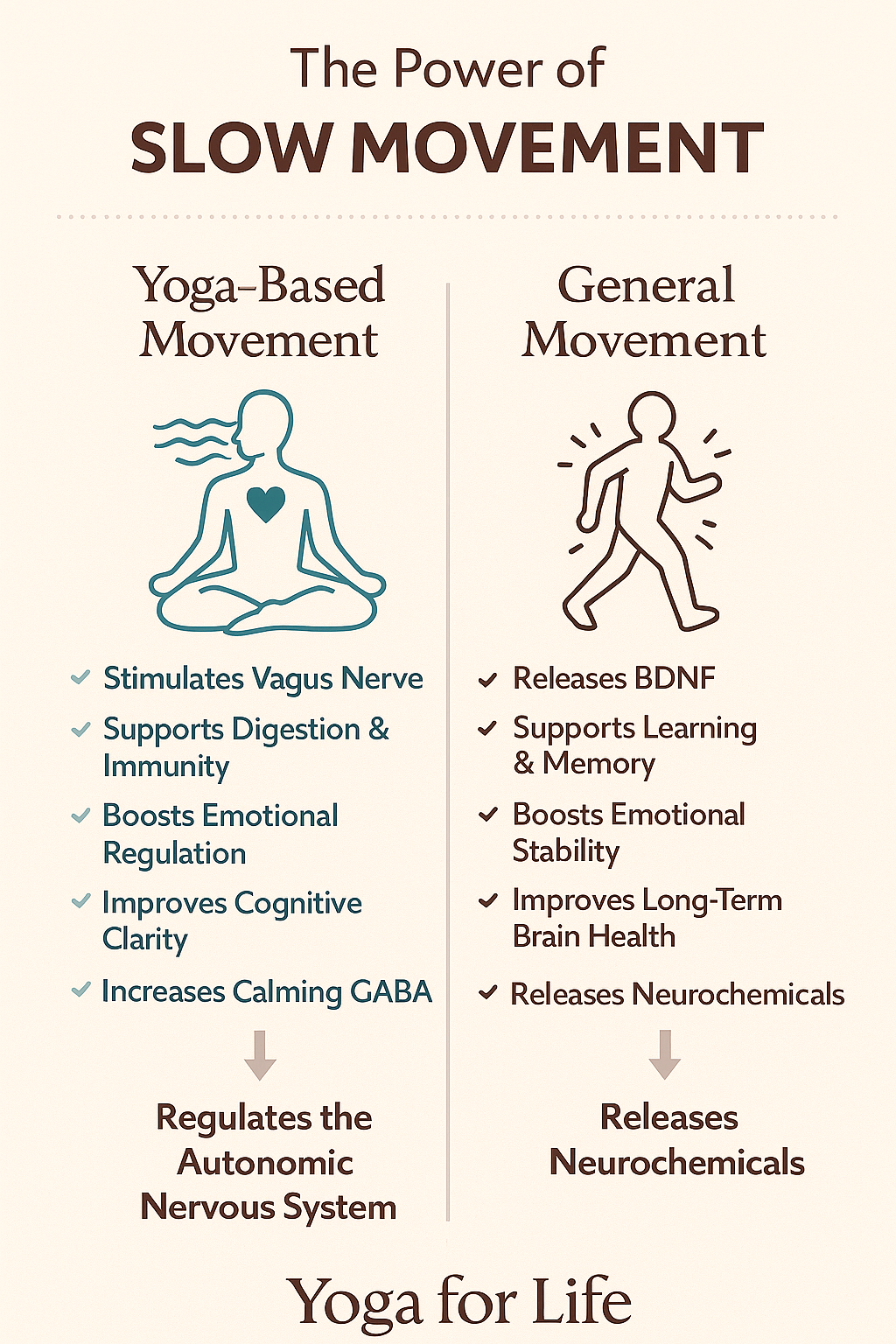
Yoga-based practices, especially slow, breath-led ones, help regulate the autonomic nervous system. Breath lengthens the exhale, stimulating the vagus nerve. This increases parasympathetic tone, which supports digestion, immunity, emotional regulation and cognitive clarity. Slow movement also increases GABA, the brain’s calming neurotransmitter, and helps restore the balance between the body’s stress and rest systems.
Meanwhile, physical movement — even at low intensity — releases BDNF, a neurochemical that supports learning, memory, emotional stability and long-term brain health. In other words, slow movement still creates powerful change.
So what does this mean on the mat?
It means that rushing to the “full expression” of a pose can work against the very well-being you came to cultivate. It means slowing transitions, pausing before you move and noticing your internal landscape are not optional extras: they are the practice. They build body awareness, protect joints, reduce injury and cultivate the kind of strength that supports you at 40, 60 and 95!
Slowness doesn’t mean doing less.
Slowness means doing with attention.
In yoga class, great teachers encourage you to honour transitions — the spaces between shapes — and use them to reconnect with breath, sensation and nervous system regulation. Try moving at half the speed you usually do. Notice how different your practice feels. Now, walking to your car, around the house and breaking the speed limit less. Slow down how you speak!
When you slow down, your physiology shifts, your mind softens, and your wellbeing begins to recalibrate.
Slowness isn’t a luxury.
It is medicine.
And it’s one of the most powerful things you can bring into your yoga practice, and into your life.