When your teacher says… ‘tune into your body!?’
4-minute Read
You sit on your yoga mat in class, take a deep breath and then the yoga teacher says- ‘I want you to scan your body and calibrate’: then they take 10 minutes to getstarted. Your thinking, can we just get on with it!!!!!
They’re asking you to apply Interoception.
Much of what yoga teachers teach works, yet many teachers cannot clearly explain why. Interoception, nervous system regulation, and pain modulation are often present in practice, but absent from teachers’ conceptual understanding, leaving important tools under-theorised and sometimes misrepresented.
Interoception is simply our ability to notice what’s happening inside our bodies.
It’s how we sense things like our breathing, heartbeat, hunger, tension, warmth, fatigue, or pain, and how we make sense of those signals. Interoception is what helps us answer the question: “How am I doing right now?”
Most of us think of the body as something we move or stretch, but interoception is about listening, not doing. It’s the felt sense of being in a body.
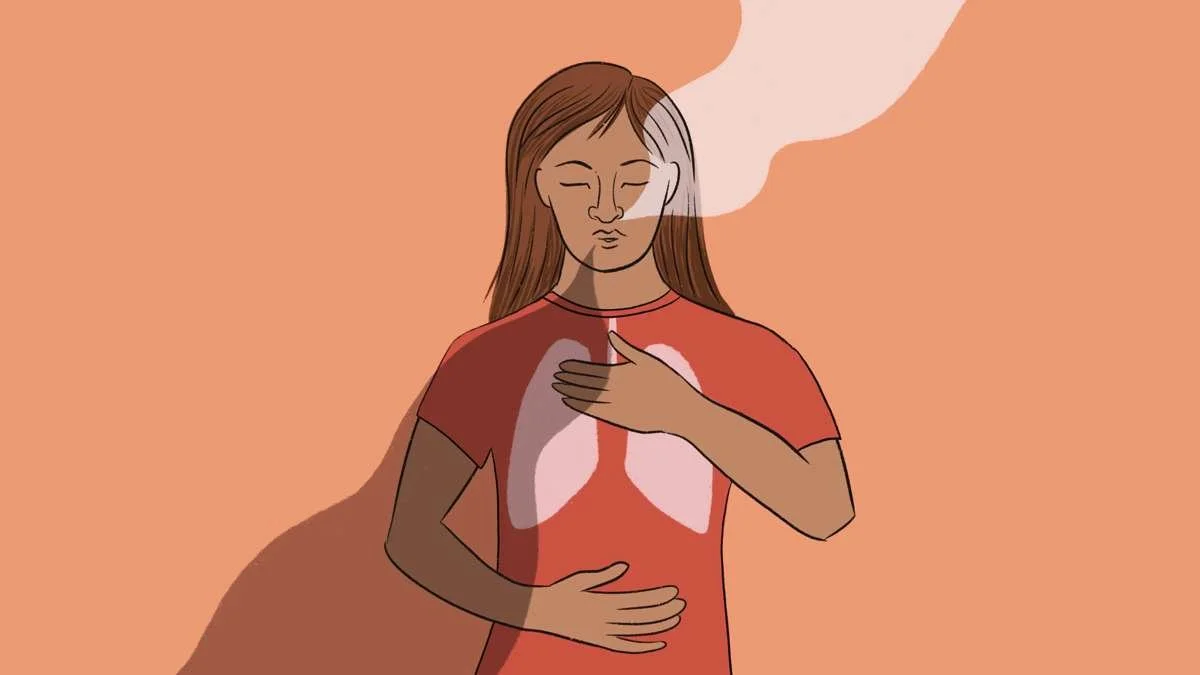
Interoception is a skill, not a trait
Some people seem naturally more “in touch” with their bodies than others—but interoception isn’t something you either have or don’t have. It’s a trainable skill.
Like strength or flexibility, it develops with practice. The more often you pause, notice, and reflect on internal sensations, the easier it becomes to recognise them—and to respond in a helpful way.
Importantly, this doesn’t mean walking around all day hyper-focused on your body. It means building enough familiarity that you can access this information when you need it.
How yoga, movement, and mindfulness fit in
Yoga, mindful movement, and meditation naturally train interoception because they repeatedly bring attention inward.
When you’re invited to notice:
the rhythm of your breath,
the pressure of your feet on the floor,
the warmth in your muscles,
your heartbeat after effort,
or the difference between tension and ease,
you are practising interoception—whether you call it that or not.
Movement plays an important role because it amplifies internal signals. After a few sun salutations, it’s much easier to feel your heart rate or breath. That contrast gives the nervous system something clear to tune into.
Mindfulness practices add another layer by helping us notice these sensations without immediately judging or trying to fix them.
Why interoception matters for pain, stress, and emotions
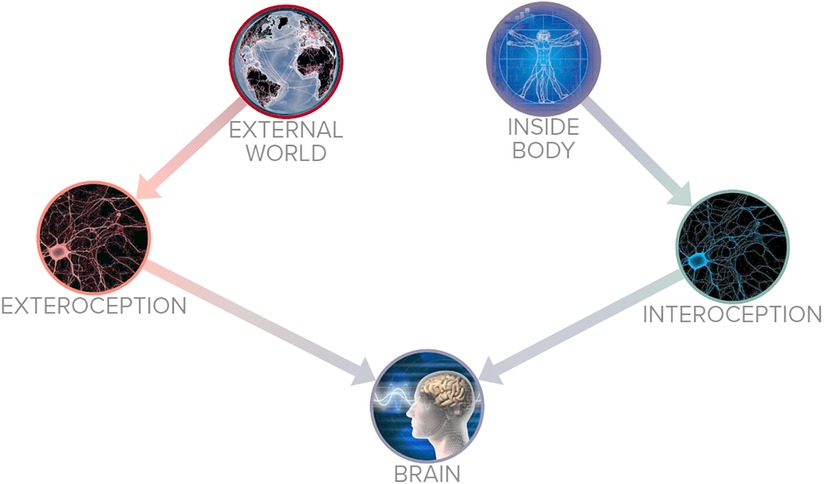
The brain is constantly balancing information from the outside world (exteroception) and the inside of the body (interoception), and practices like yoga influence how that balance is perceived and regulated.
Interoception helps us recognise what’s happening before we’re overwhelmed.
When this skill is stronger, people are often better able to:
notice early signs of stress or overload,
distinguish between effort and strain,
respond to pain with curiosity rather than panic,
regulate emotional reactions,
and choose when to rest, move, breathe, or step away.
This is why interoception is increasingly thought to be one reason yoga and mindfulness help with not just physical pain, but also emotional and mental stress.
There’s no “right” way to feel your body
One of the most reassuring things from the research is that people don’t need to be taught a perfect technique for interoception to benefit.
Some people connect through breath.
Others through movement.
Some through touch, sound, or emotion.
Some barely notice anything at first—and that’s still part of the practice.
What matters is exposure, repetition, and permission to explore. Over time, people tend to find their own ways in.
The latest research on interoception.
Recent research frames interoception as a multi-dimensional, trainable process rather than a single ability to “sense the body.” Contemporary models show that interoception involves not only detecting internal signals (such as heartbeat or breath), but also how those signals are interpreted, evaluated, and used for regulation, particularly in relation to emotion, stress, and pain. Studies increasingly suggest that improvements in interoception linked to practices like yoga, mindfulness, and movement occur less through enhanced sensory accuracy and more through changes in attention regulation, emotional awareness, and trust in bodily signals. Neuroimaging research implicates networks involving the insula, anterior cingulate cortex, and salience network, supporting the idea that interoception plays a central role in how people appraise internal states and decide whether they are threatening, manageable, or neutral. Overall, the emerging consensus is that interoception is a modifiable mechanism connecting bodily awareness with mental and emotional health, making it a promising explanatory pathway for the effects of mind–body practices.
Wrap Up: Just trust the Yoga….
References
Valerie N. Voois et al. (2023). Mind–body practices, interoception, and pain: a scoping review of behavioural and neural correlates. Neuroscience & Biobehavioral Reviews
Bud Craig (2002). How do you feel? Interoception: the sense of the physiological condition of the body. Nature Reviews Neuroscience, 3(8), 655–666.
A. D. (Hugo) Critchley & Garfinkel, S. N. (2017). Interoception and emotion. Current Opinion in Psychology, 17, 7–14.